2026-10-19 ·
How To Check A Leaking Dishwasher In Pre-War Chicago Apartments
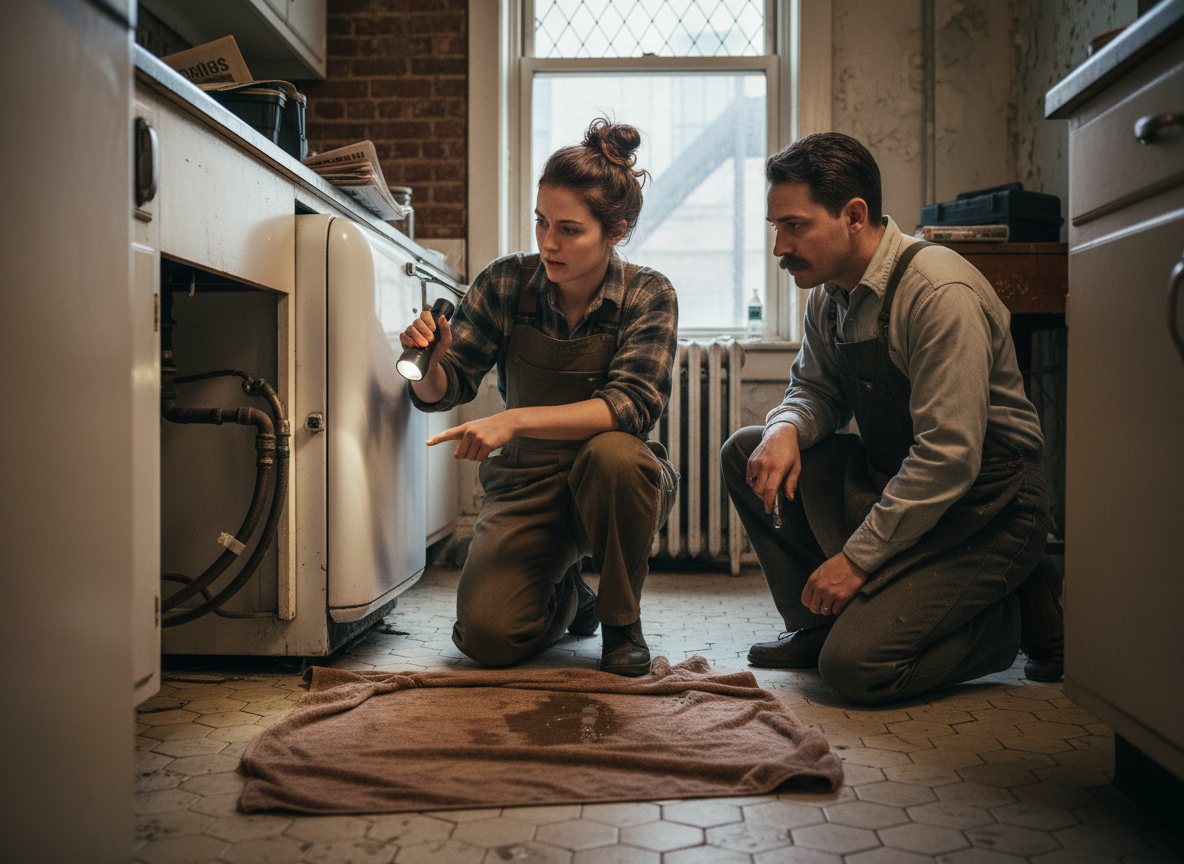
In pre-war Chicago apartments the first check for a leaking dishwasher starts with powering off the unit at the breaker and pulling it forward six to eight inches to inspect the floor pan for standing water. These buildings in neighborhoods such as Lincoln Park and Wicker Park typically feature narrow kitchens with original cast-iron or galvanized supply lines that corrode over decades, so any moisture near the front legs or toe-kick usually traces to the door gasket or the drain hose connection under the sink. Move slowly; the floor may slope slightly toward the Chicago River side of the block, sending small leaks toward the hallway before they pool visibly.
Safety and Access in Tight Pre-War Kitchens
Pre-war units in Cook County were built with 30-inch cabinet openings that leave little room for modern 24-inch dishwashers, so the first task is clearing the area without stressing the 60- to 80-year-old flooring. Turn off the water supply valve under the sink, which is often a gate valve that may not close fully after years of mineral buildup from Chicago’s hard water. Place towels and a shallow pan beneath the unit before sliding it out; the original oak or maple subfloor can swell quickly when wet. If the leak appears only after the cycle ends, note the exact minute the water stops draining so you can correlate it with the timer or float switch later. Buildings in Wicker Park and Logan Square frequently share walls, meaning a leak that reaches the unit below will be noticed by neighbors before the upstairs tenant sees it.
Checking the Door Gasket and Latch
The most common leak point on dishwashers installed in these older apartments is the door gasket, which hardens from repeated exposure to hot summers and cold winters in Chicago’s humid continental climate. Run a fingertip along the rubber seal while the door is open; any brittleness, cracks, or flattened sections allow water to escape during the wash or rinse phase. Close the door and listen for a solid click from the latch; a weak latch lets the door bow outward under internal pressure. Clean the gasket with a damp cloth and mild detergent, then test by running a short cycle with the unit pulled out far enough to watch the seal. If water still escapes along the bottom edge after this step, the issue usually lies farther back in the sump or the float assembly.
Inspecting the Drain Hose and Connections
In pre-war buildings the dishwasher drain hose often routes through the same hole in the cabinet as the original sink plumbing, creating sharp bends that trap debris and create back-pressure. Trace the hose from the dishwasher to the sink tailpiece or air gap; look for kinks, splits, or loose clamps at either end. Chicago’s cold winters can cause minor contraction in the hose material, loosening factory clamps over time. Place a bucket under the connection and run the drain portion of the cycle only; any water spraying from the clamp indicates the need for a new stainless-steel band. If the hose itself shows white mineral rings, replace the entire 5/8-inch line rather than patching it, because the interior walls are likely thinned by decades of detergent residue.
When to Stop and Call for Dishwasher Repair
If water continues to appear after the gasket and hose checks, the problem is usually the inlet valve or the sump seal, both of which sit behind the unit and require removing the lower access panel. At that point further DIY work risks damaging the original electrical wiring common in these apartments. Readers dealing with similar issues in nearby Evanston or Oak Park often find the same valve failures after 10–12 years of service. For additional context on humidity-related appliance wear, see our guide on refrigerator maintenance in humid Chicago summers. If the leak has already reached the subfloor or affected the unit below, stop the water supply and contact a local technician who knows the quirks of pre-war plumbing in Cook County.